

























Blog - EXPERTISE & INNOVATIONS - Magnetic Sensors - Tubular magnetic sensors: a compact and reliable solution for industrial detection


Proximity sensors exist in many shapes and sizes in order to meet the various integration constraints found in industrial equipment. Among the most common designs are tubular sensors, threaded tubular sensors, and screw-mounted sensors, also known as flat housing sensors. Tubular and threaded tubular models are particularly valued for their compact design, ease of installation, and robustness. Today, they represent a reliable solution for a wide range of industrial detection applications.
In this blog article, we explain how they work and where they are used.
A tubular magnetic sensor is a proximity sensor designed to detect the presence of a magnetic field, usually generated by a magnet.
Its sensitive element is a REED switch, also known as a reed contact. This component consists of a small electrical contact sealed inside a glass capsule. When exposed to a magnetic field, the internal metal reeds either move together or apart, causing the electrical contact to open or close.
Thanks to their compact cylindrical shape, these sensors can be easily integrated into many mechanical systems or industrial machines.
Tubular sensors are often clipped or bonded into a support, while threaded versions are designed to be mounted in a threaded hole and secured using nuts.
Reed technology offers several important advantages. It enables the design of extremely compact, reliable, and durable sensors. Because they operate without a power supply, they are particularly suitable for low-power systems or connected applications. They can also operate in harsh environments and provide relatively long sensing distances, depending on the sensitivity of the reed switch and the strength of the magnet used.
Depending on the configuration, several types of contacts can be implemented. Form A corresponds to a normally open contact, meaning the circuit remains open in the absence of a magnet and closes when a magnetic field is detected. In contrast, Form B is a normally closed contact that opens when a magnetic field is present. Form C combines a normally open contact and a normally closed contact with a common terminal, providing a changeover function.
There are also bistable versions known as Form L. In this configuration, the sensor retains its state after the magnet has passed. If the contact is initially open and a magnetic field with the correct polarity appears, it closes and remains closed even after the magnet moves away. Conversely, a magnetic field with the opposite polarity will reopen the contact. This principle allows the system to store a position without requiring power.
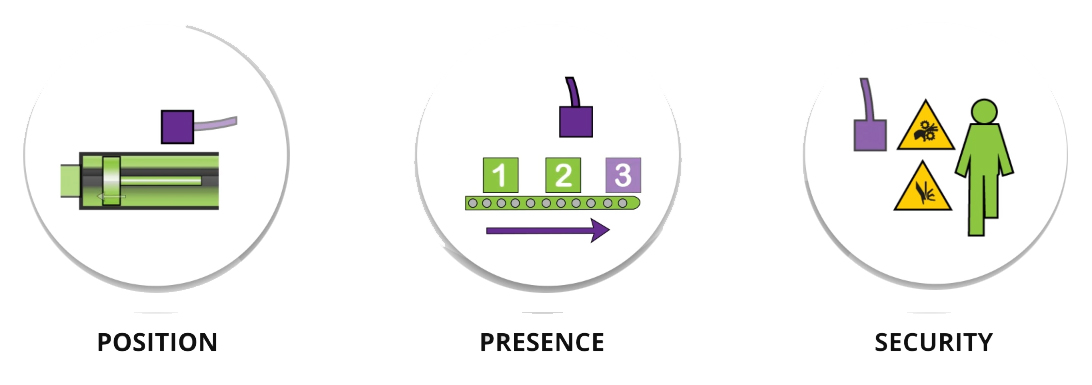
Thanks to their simplicity and reliability, tubular magnetic sensors are used in many industrial sectors. Their main function is to detect position, the presence of a part, or the opening of a safety device.

In the agricultural sector, these sensors help improve machine productivity. They are used to monitor the position of mechanical components and to supervise the operation of equipment.
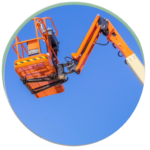
Mobile machinery used in construction and material handling is another important application area. In these demanding environments, magnetic sensors provide essential information for monitoring and controlling equipment. They help ensure safe machine operation while improving equipment availability.

These sensors are also widely used in household appliances, where they often detect the opening or closing of doors and protective covers. This function directly contributes to user safety by preventing a device from operating when certain protections are open.

In the medical field, magnetic sensors contribute to the reliability of equipment and the safety of patients. They can be used to monitor mechanical positions, verify the closure of compartments, or support the proper operation of diagnostic devices.

Technologies related to renewable energy also make use of these sensors. They can be found in wind turbines, solar installations, electric bicycles, and electric vehicle charging stations.
The operation of a magnetic sensor depends on the relative position between the sensor and the magnet. Several activation configurations are possible depending on the mechanical design of the system.
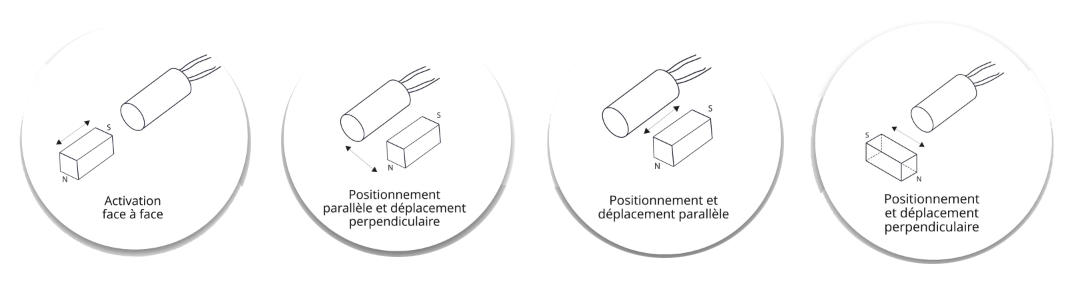
The magnet may be positioned directly facing the sensor, move parallel to it, or move perpendicularly to the sensor axis. These different possibilities make it easy to adapt the detection solution to the mechanical architecture of the equipment and provide great flexibility during the design phase.
One of the main advantages of tubular sensors lies in their ease of integration. Their cylindrical shape allows them to be installed discreetly in many types of equipment.
Non-threaded tubular sensors are generally clipped or bonded into a support. This approach makes it possible to design extremely compact sensors that integrate perfectly into the structure of a machine.
Threaded tubular models, on the other hand, are designed to be mounted directly into threaded holes. They are usually supplied with fixing nuts that make positioning and adjustment easier.
Tubular magnetic sensors are available in several standard dimensions to accommodate different integration constraints. The most common sizes correspond to thread standards such as M8, M10, and M12.
The choice of housing material depends on the operating environment. Plastic housings are often an economical solution suitable for many applications. Stainless steel housings provide excellent resistance to corrosion and harsh environments. Brass housings offer strong mechanical robustness and can be used in applications requiring resistance to higher temperatures, typically up to about 120°C.
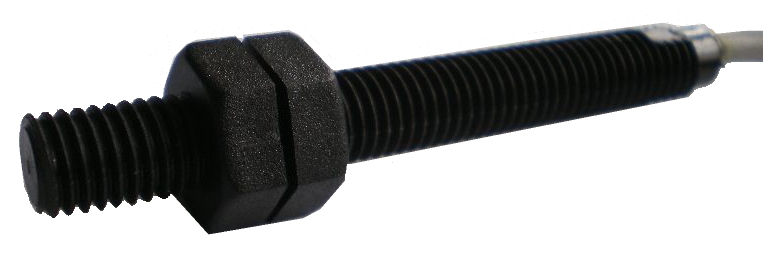
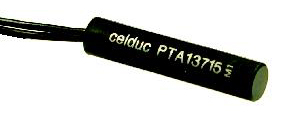
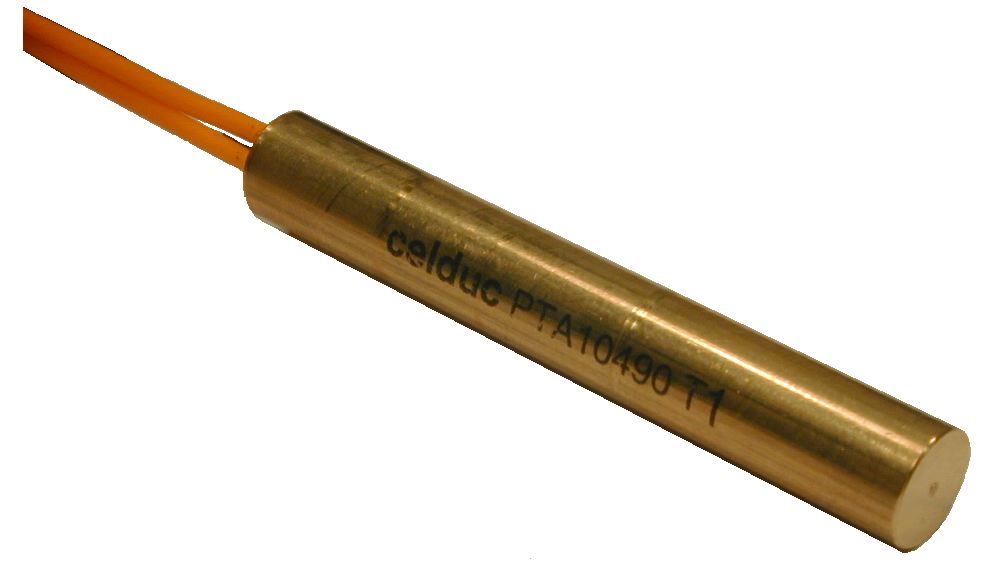
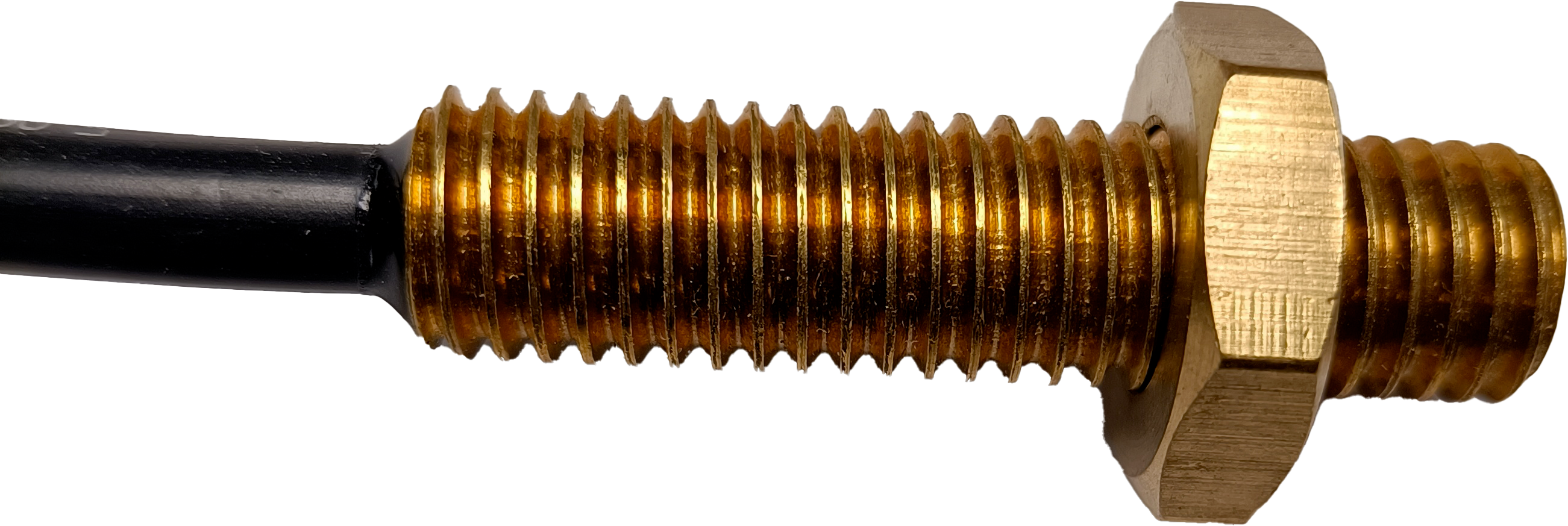
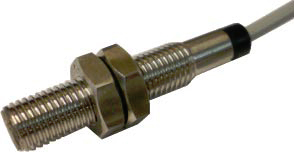
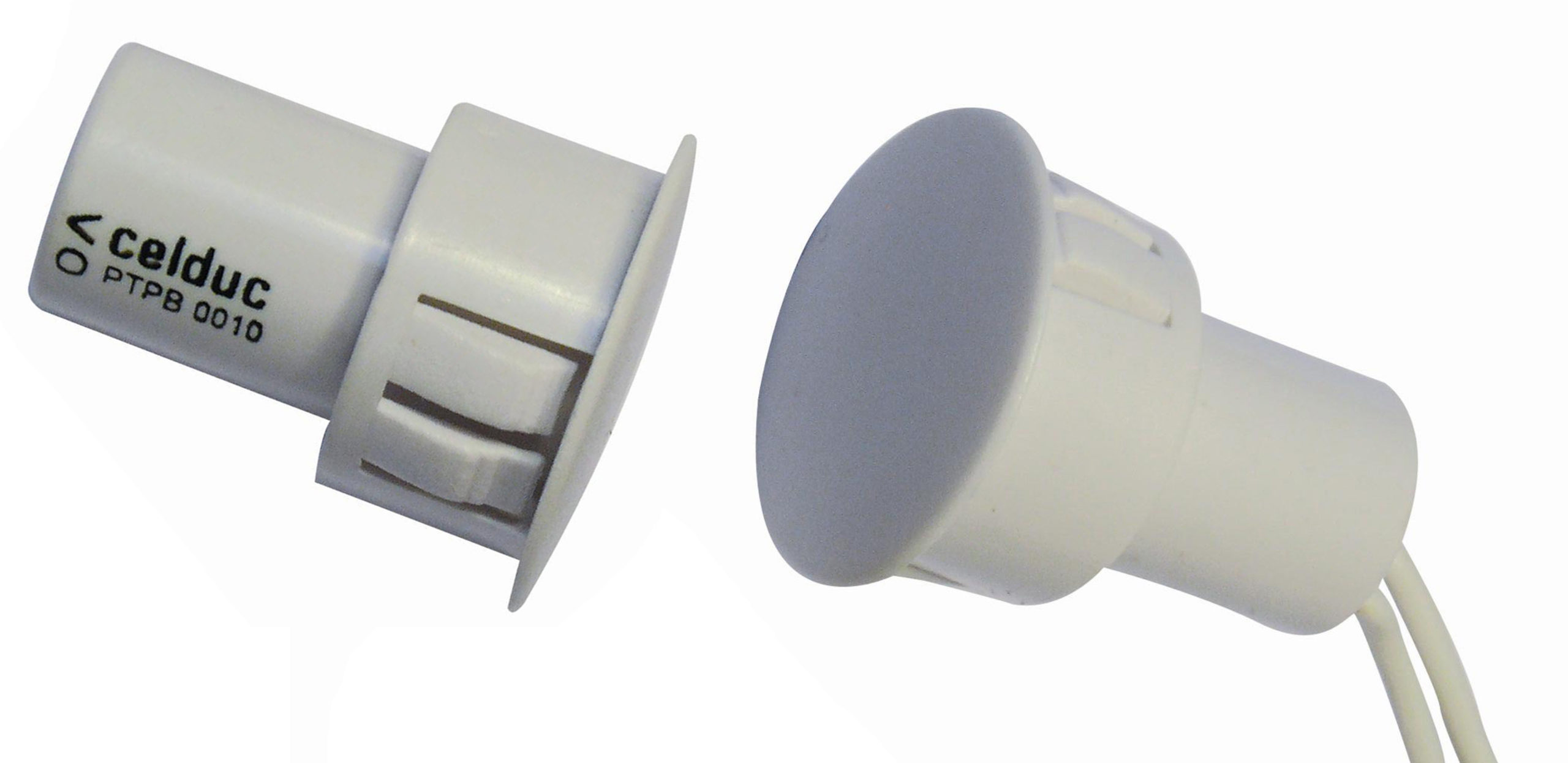
celduc’s range of tubular magnetic proximity sensors.
Tubular magnetic sensors can operate in many electrical configurations. They are suitable for both low-voltage applications and switching mains loads.
This versatility allows these sensors to be easily integrated into a wide range of control or monitoring systems.
Beyond standard product ranges, sensors can also be developed to meet specific requirements. Customized solutions may involve housing materials, cable or connector types, or the integration of specific accessories.
Some applications require sensors capable of withstanding very high temperatures, up to 200 °C. Others require sensors certified for explosive atmospheres or equipped with safety loops for alarm systems. It is also possible to design magnets integrated into a housing identical to that of the sensor in order to simplify installation.
Tubular magnetic sensors represent a simple, reliable, and robust solution for many industrial detection applications.
Thanks to their compact design, durability, and high integration flexibility, they effectively meet the needs for position, presence, and safety detection in industries such as agriculture, manufacturing, medical technology, and renewable energy.
With more than 50 years of expertise in magnetic proximity sensors, it is possible to design solutions perfectly tailored to each application.
Do you have a project?
Tell us about your requirements and we will help you find the most suitable solution.

D‑U‑N‑S® Number : 117690071
Phone : 312-420-0519
434 E. Main Street, #429
Centerport NY 11721
USA

