




























Blog - OUR MARKETS - Solid State Relays and Sensors for energy applications
As the world rapidly transitions towards cleaner, smarter, and more efficient energy systems, the demand for robust, precise, and maintenance-free components is higher than ever. In this context, solid state relays (SSRs) and advanced sensors have emerged as crucial technologies powering innovation across the energy sector—from traditional oil & gas applications to next-gen solar, wind, and battery systems.
Why Solid State Relays?
Unlike electromechanical relays, solid state relays have no moving parts. This offers multiple advantages:
SSRs are especially well-suited for the energy sector, where equipment often operates under extreme temperatures, vibrations, and remote conditions.
The role of magnetic sensors
Sensors provide the real-time data and feedback necessary for automation, safety, and efficiency. Whether it’s temperature monitoring in a wind turbine nacelle or flow sensing in a biomass boiler, accurate sensing is the backbone of modern energy infrastructure.
Let’s explore in this new blog article how SSRs and sensors are being used in various parts of the energy ecosystem.
Oil and gas are crucial energy sources for the industry. They are extracted, processed, and distributed using most sophisticated technologies and procedures. Due to the high potential hazards for people and environment, strict sets of regulations must be observed within the oil and gas sector.
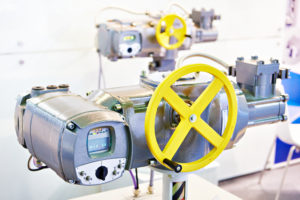
Valve actuators are devices that move valves into specific positions using external power sources—manual, electric, pneumatic, or hydraulic. celduc® relais focuses on electric actuators, offering reliable control solutions especially for regulating (modulating) actuators, which perform frequent switching operations. Traditional electromechanical contactors have limitations in such high-cycle applications; solid-state relays (SSRs) are the optimal alternative due to their durability, fast switching, and maintenance-free operation.
celduc® has developed a range of reversing SSR modules for three-phase motor control in actuators, addressing challenges like high inrush currents, voltage protection, and electromagnetic compatibility (EMC). These modules feature built-in interlocking to prevent simultaneous activation of both directions, with configurable or fixed delay times between direction changes. Products like SG969100, SGR8671510, and SMR8621520 cover various power levels up to 7.5kW.
For higher-power applications, custom assemblies using individual SSRs and user-designed control circuits are possible. celduc® also develops custom solutions for valve actuator manufacturers, including ATEX-compliant modules and designs supporting both AC and DC operation (e.g., for braking).
In summary, celduc® offers both standard and custom SSR-based reversing solutions tailored for the reliable, safe, and efficient control of electric valve actuators, even in demanding industrial environments.
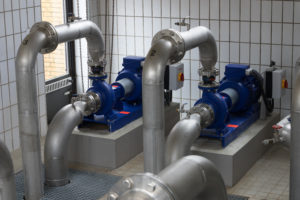
Pumps and compressors are essential equipment in the oil and gas industry, whether for the transfer of fluids (crude oil, natural gas, water, chemicals) or for maintaining pressure in pipelines and processing units.
Their proper operation is critical, and static relays play a key role in automation, protection, and monitoring.
One example of their use is automatic start/stop based on pressure or flow rate. Solid State Relays receive analog or digital signals from pressure sensors, flow transmitters, or tank level indicators.
Depending on predefined thresholds (e.g., minimum pressure, maximum flow rate), they trigger the automatic start or stop of the electric motor driving the pump or compressor.
In a pipeline pumping station, for example, if the pressure drops below a certain threshold, a SSR activates the backup pump. If the pressure reaches the upper limit, the relay automatically shuts off the pump to prevent overpressure.
Underground, the benefits of a compact, remote-controlled demolition robot become unmistakable.

Demolition robots are remotely controlled, mobile machines used to break down structures in construction, mining, and industrial demolition environments. These robots often operate in harsh conditions involving:
To ensure reliable and precise control of electric motors and actuators in such rugged environments, Solid-State Relays (SSRs) are commonly used.
SSRs are used to start/stop or reverse DC or AC motors driving:

A dual axis tracking system is a system that follows the sun in multiple angles ensuring that the sunbeam angle is 100% correct on the panel. Tracking the sun can be done in 2 axes : azimuth and elevation. By tracking the sun, the efficiency of the solar panels can be increased by 30-40%. In fact, the efficiency of a photovoltaïc cell depends on its orientation toward the sun.
DC reversers are used for the DC motors of the tracking systems to reverse the rotational direction.
Key products are : XKRD30506 and SGRD01006

A solar farm is a large collection of photovoltaic (PV) solar panels that absorb energy from the sun, convert it into electricity and send that electricity to the power grid for distribution and consumption.
celduc’s products are used in solar farms for several applications :
–Winter overvoltage protection of converters : winter has specific effects on the operation of a solar PV system, like DC overvoltage due to low temperature.
–No-load protection of converters : as converters destroy themselves if there is no load
–Efficiency boosters : solar power boosters are designed to increase the output of a PV panel.
Celduc’s DC IGBT Solid State Relays, SCI range, can be used in this system.
Globally celduc’s products ensure an important contribution to the maximum capacity utilization of the solar electricity produced in photovoltaic power plants, especially plants equipped with tracking systems.
People have been using windmills to utilize the wind’s energy for a long time, but today wind turbines are used to capture that energy and turn it into electricity.
Wind turbines consist of a large tower and several blades that use the power of the wind to spin. The blades are connected to a shaft that spins a generator in order to create electricity.
Like solar energy, power generated with wind can either be used for a specific application such as pumping water or powering a farm, or transferred into the electrical grid to meet other energy needs.

Winter is supposed to be the best season for wind power – the winds are stronger, and since air density increases as the temperature drops, more force is pushing on the blades. But winter also comes with a problem: freezing weather.
Even light icing can produce enough surface roughness on wind turbine blades to reduce their aerodynamic efficiency, which reduces the amount of power they can produce
The solution is obvious: de-ice the wind turbine blades. The system consists of three elements :
-an ice detection system,
-the heating of the blades (the Heating elements integrated into the blade surface at manufacture),
-system to control the de-icing process.
Solid State Relays are used to control the heating elements : we recommend our SO9 Serie optimized for resistive loads applications.

-Fiber and compound manufacturing
-Blade molding machines (using wire heaters controlled by AC SSR)
AC Solid State Relays designed for resistive loads AC-51 are used in these equipment.

There are many different heating methods that have entered the market throughout the years to heat wind turbine blades during the curing process.
Hot air blowers or kilns are less and less used because they are expensive to buy and expend a lot of energy and electricity.
Heating blankets are a modern approach to curing wind turbine blades and are an energy efficient solution. This technology ensures the heat is effectively and evenly distributed, while continuously maintaining at optimal temperatures between 60 and 80°C.
AC Solid State Relays are used for temperature control.

PV energy is generated during the day, while the user generally consumes it during the evening. So it is worth to have an energy storage system on site.
These are exciting new markets for relay technologies, but they come with a need for new switching solutions. Higher switching capacities and smaller dimensions – these are the demands relays are facing today. Switch solutions that can handle the high currents involved in energy management systems are becoming paramount. Celduc’s range of DC Solid State Relays is currently up to 1200Vdc and 150A.
DC SSRs are used to switch charge and discharge. We recommend the use of solid state relays as relays that are used for charging and discharging batteries must naturally be able to carry high currents over a longer period of time, with frequent ON/OFF switching. DC solid state relays can solve the intermittent and unstable problems brought by the grid connection of energy storage and power generation and ensure the reliabilty of the power supply of the microgrid system.
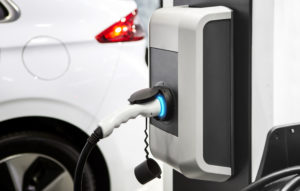
Solid state relays (SSRs) support Electric Vehicle (EV) charging infrastructure. SSRs dynamically switch charging circuits to manage peak loads and demand response, ensuring efficient ON/OFF control of charging operations. In EV charging systems, SSRs also enhance safety and reliability by controlling cooling fans and maintaining optimal operating conditions. The featured key products include DC Solid State Relays (SCM Series) and Three-Phase Solid State Relays (SGT8 Series), designed for high-frequency DC load switching, long service life, very high switching frequency, and overall system reliability. Together, these solutions demonstrate how solid state technology improves performance, efficiency, and durability in modern energy applications.
Reed magnetic sensors ensure safe and efficient electric vehicle (EV) charging operations. Reed sensors detect the presence of the charging connector, helping to guarantee a secure and properly initiated charging cycle. To further enhance safety, magnetic safety sensors continuously monitor the connection between the plug and socket to prevent accidents and electric arcs, while confirming the integrity of the safety lock. The highlighted key products include PCB-mounted magnetic sensors (PHA/PHC Series), which require no power supply and offer reliable installation without mechanical wear, and coded magnetic safety sensors (PSS Series), designed to secure systems and operate effectively in harsh environments such as humidity and dust. Together, these sensing solutions strengthen safety, reliability, and durability in EV charging infrastructure.
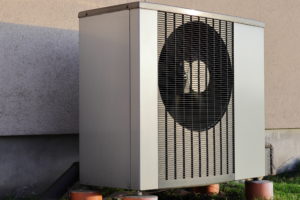
A heat pump captures latent heat from the air, water, or ground and transfers it indoors using a thermodynamic cycle involving phase changes of a refrigerant. It offers high energy efficiency, especially with a COP (Coefficient of Performance) above 3, meaning it delivers more heat than the electrical energy it consumes. celduc® relais provides solid-state relay (SSR) solutions ideal for controlling the motors (compressors, pumps, fans) and auxiliary heaters in heat pumps. SSRs improve reliability by handling high inrush currents, enabling soft starts, and offering motor speed control, especially useful in both domestic (single-phase) and industrial (three-phase) systems. celduc’s innovative products, including softstarters and phase angle controllers, are designed to optimize performance and reduce wear.
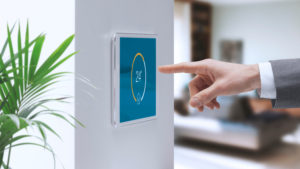
Solid State Relays (SSRs) play a crucial role in commercial and industrial HVAC systems by offering reliable, silent, and long-lasting switching solutions for both heating and motor control. Unlike traditional electromechanical relays, SSRs provide fast response, low input current, and can handle various load types like fans, compressors, and heating elements. In HVAC systems, temperature can be regulated through on-off control, PID (closed-loop) control, or PWM (pulse width modulation), and celduc® relais offers SSRs adapted to each method. For example, our SO465620 supports PWM control for precise heating, and the ECOM0010 module integrates communication, current monitoring, and PID control. In motor control, SSRs are used for compressors and fan speed regulation, helping to improve energy efficiency. Overall, celduc’s range of SSRs provides durable and efficient solutions for modern HVAC system requirements.
In conclusion, as the global energy landscape evolves toward greater efficiency, sustainability, and electrification, solid state relays and magnetic sensors are proving to be indispensable technologies across every segment of the sector—from oil & gas and mining to solar, wind, energy storage, EV charging, heat pumps, and smart buildings. Their ability to deliver fast switching, high reliability, long operational life, and precise control under demanding conditions makes them ideal for modern energy infrastructures that require safety, automation, and performance without compromise. By replacing traditional electromechanical solutions with robust solid-state technologies, energy systems become more durable, intelligent, and maintenance-free. Ultimately, SSRs and sensors are not just components—they are key enablers of a smarter, safer, and more resilient energy future.

D‑U‑N‑S® Number : 382274546
Sales department France :
+33 (0) 4 77 53 90 20
Export sales department :
+33 (0) 4 77 53 90 21
———————————-
Gender Equality Index 2026
Based on 2025 data
Final result: 88/100 (for more information)

